This is the story of how a radical new approach to leadership harnessed the collective passion and brain power of Harley-Davidson’s people to fuel one of the most unlikely business turnaround stories of all time. The global motorcycle industry would never be the same.
“We did it together.”
Harley-Davidson, 1980 to 1999
Harley-Davidson entered the 1980s with outdated products, foreign competition, quality
problems, labor unrest, and debt. Employees and dealers feared the company might not survive.
Executives, employees, unions, dealers, suppliers, and riders all had a part in building
better motorcycles and changing how the company worked.
Early 1980s
On the Brink
Harley-Davidson stood on the edge of collapse. Product quality had declined,
manufacturing practices were outdated, foreign competition was rising, and confidence
among employees, dealers, and riders was fading.
If it failed, America would lose its last major
motorcycle manufacturer, and riders, dealers, and employees would lose the community
built around it.
Early 1980s
A Shared Reckoning
Facing Reality Together
The global economy is in freefall, with soaring inflation, unemployment, and interest rates battering the motorcycle industry. Harley-Davidson, under ownership by AMF, Inc. since 1969, faces its own set of problems: mismanagement, poor product quality, labor unrest and a demoralized workforce.
In 1981, 13 Harley-Davidson executives (including Vaughn Beals and Willie G. Davidson) buy the company back from AMF, rescuing it from potential liquidation, to regain control and return it to greatness. The buyback and its “eagle soars alone” theme lift morale and optimism, but they’re short-lived as the harsh realities of the economy and a customer base that had lost faith take their toll. By year-end 1983, Harley-Davidson lays off 40 percent of its workforce.
In 1984, Harley-Davidson introduces its first new motor in nearly 20 years, the Evolution V-Twin, and the groundbreaking Softail motorcycle. Both quickly win acclaim. But the fall of 1985 brings a shocking setback: Wall Street wasn’t buying the story. CEO Vaughn Beals and CFO Rich Teerlink scramble tirelessly, but unsuccessfully, to find a lender to stave off collapse. With no alternative, Harley-Davidson begins painful preparations to file for bankruptcy, which will be announced on the first business day of 1986.
Mid 1980s
Staying Afloat
Sacrifice, Stabilization and Shared Effort
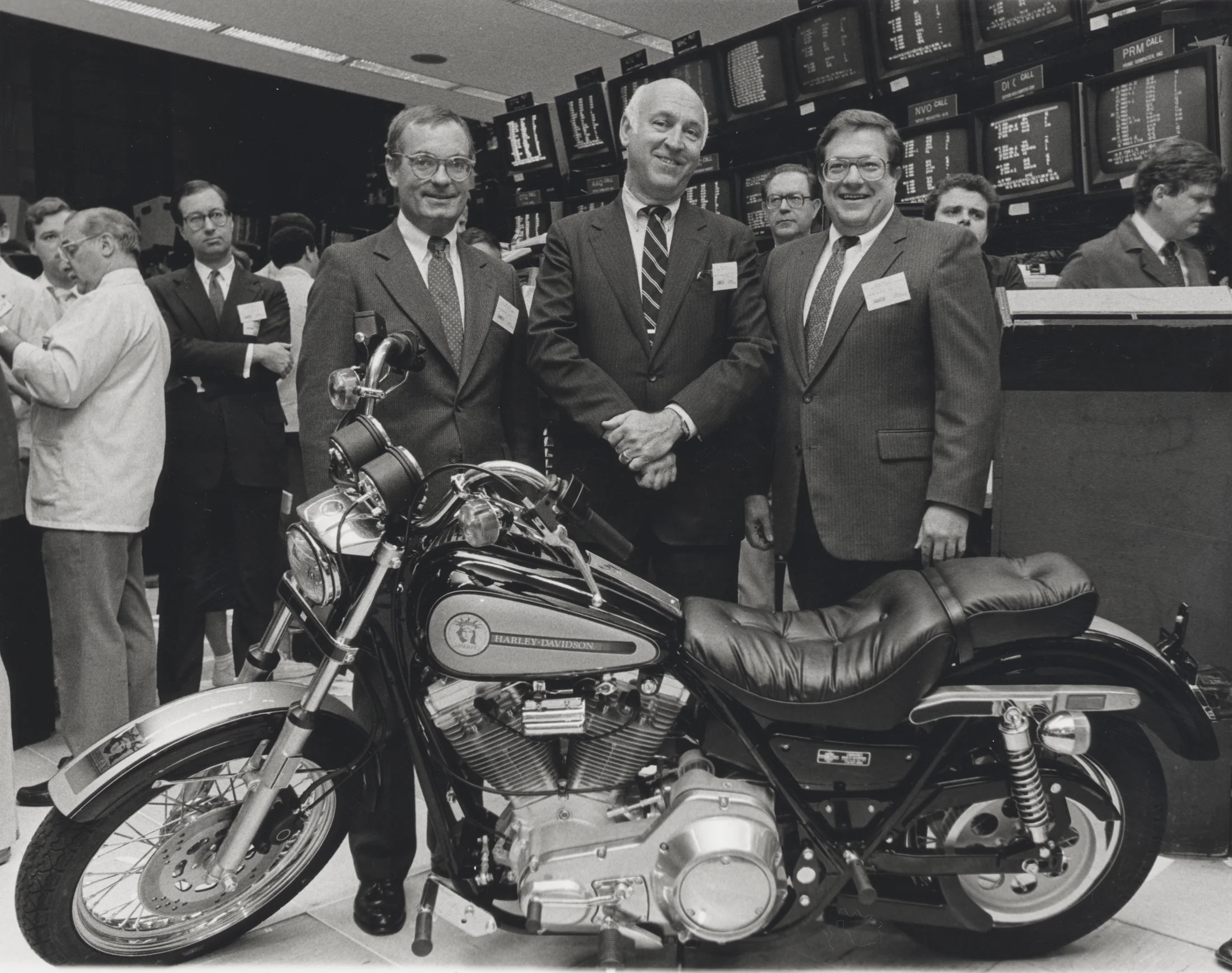
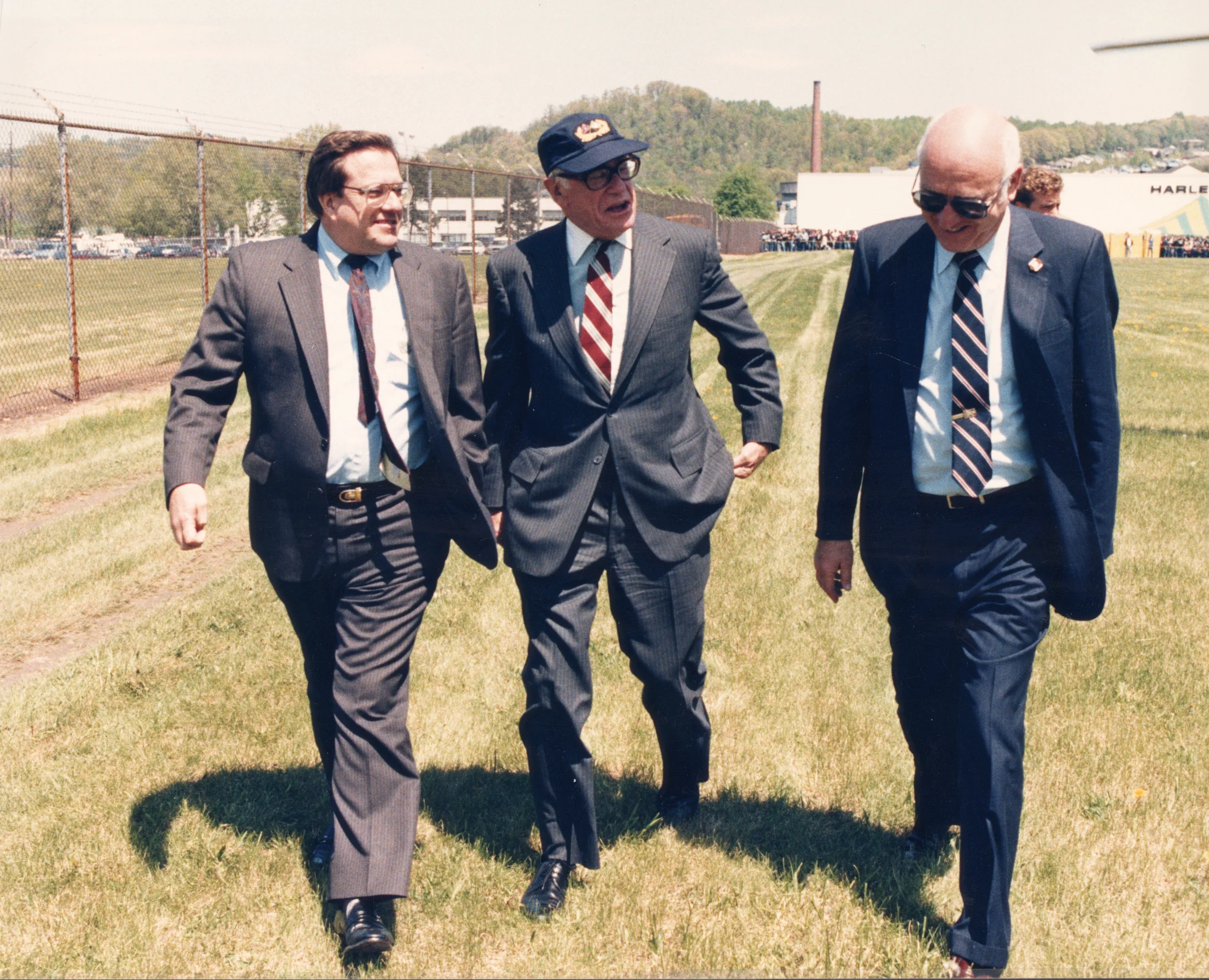
With less than one hour to spare before banks closed on New Year’s Eve, 1985, Beals and Teerlink secured one of business lore’s most stunning achievements, a $49 million financing deal. Harley-Davidson’s feared bankruptcy filing is cancelled.
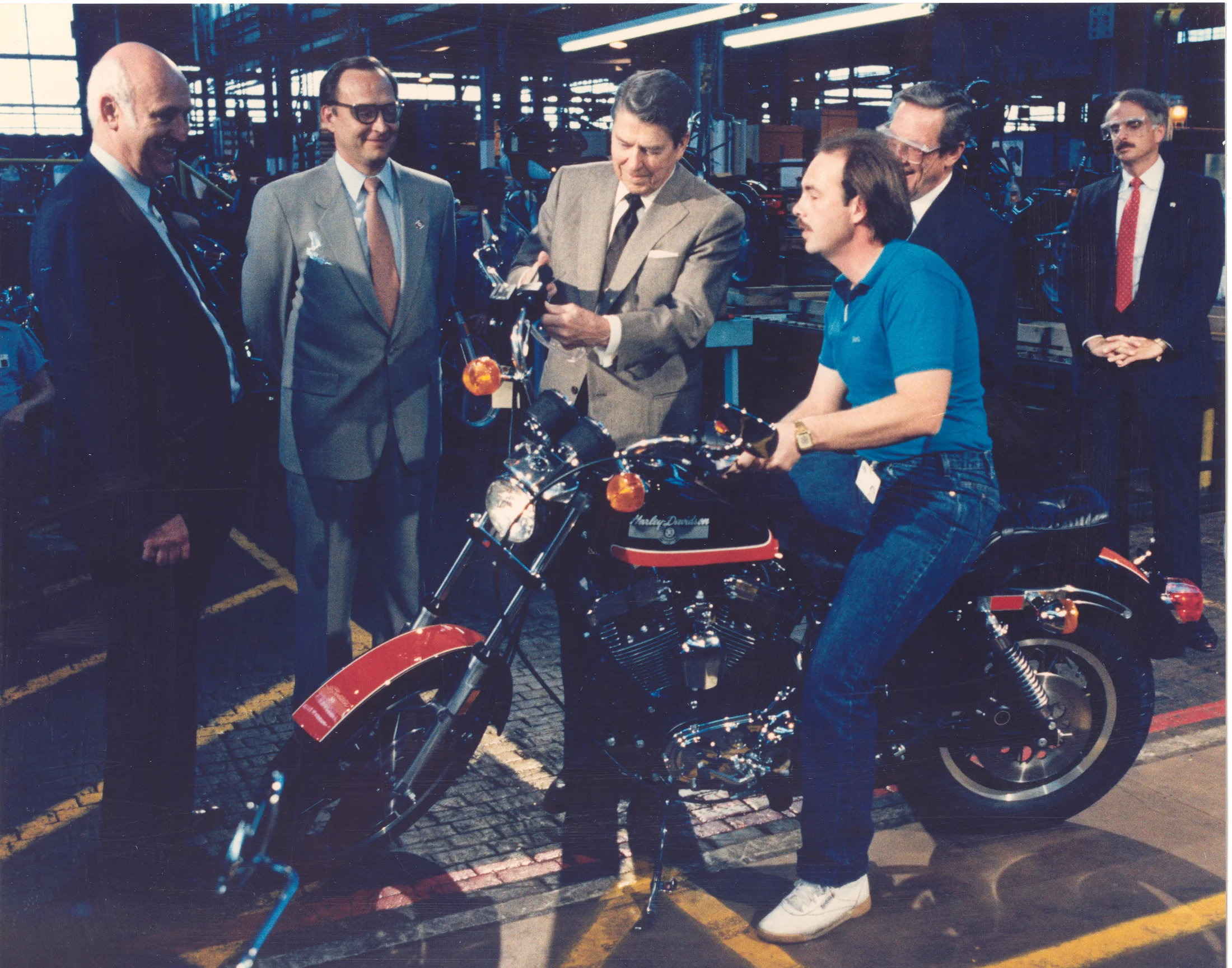
More good news follows, with increases in bike demand, powered by the new Evolution engine and Softail product line, giving the company much-needed breathing room. Sales continue to increase and profitability returns, culminating in wide financial community support for the company’s 1986 initial public stock offering. President Ronald Reagan visits Harley-Davidson’s York, Pa. plant in 1987 and calls the now-surging company, “An American success story.”
1983 - today
Harley Owners Group (H.O.G.)
Building Lifelong Emotional Connections
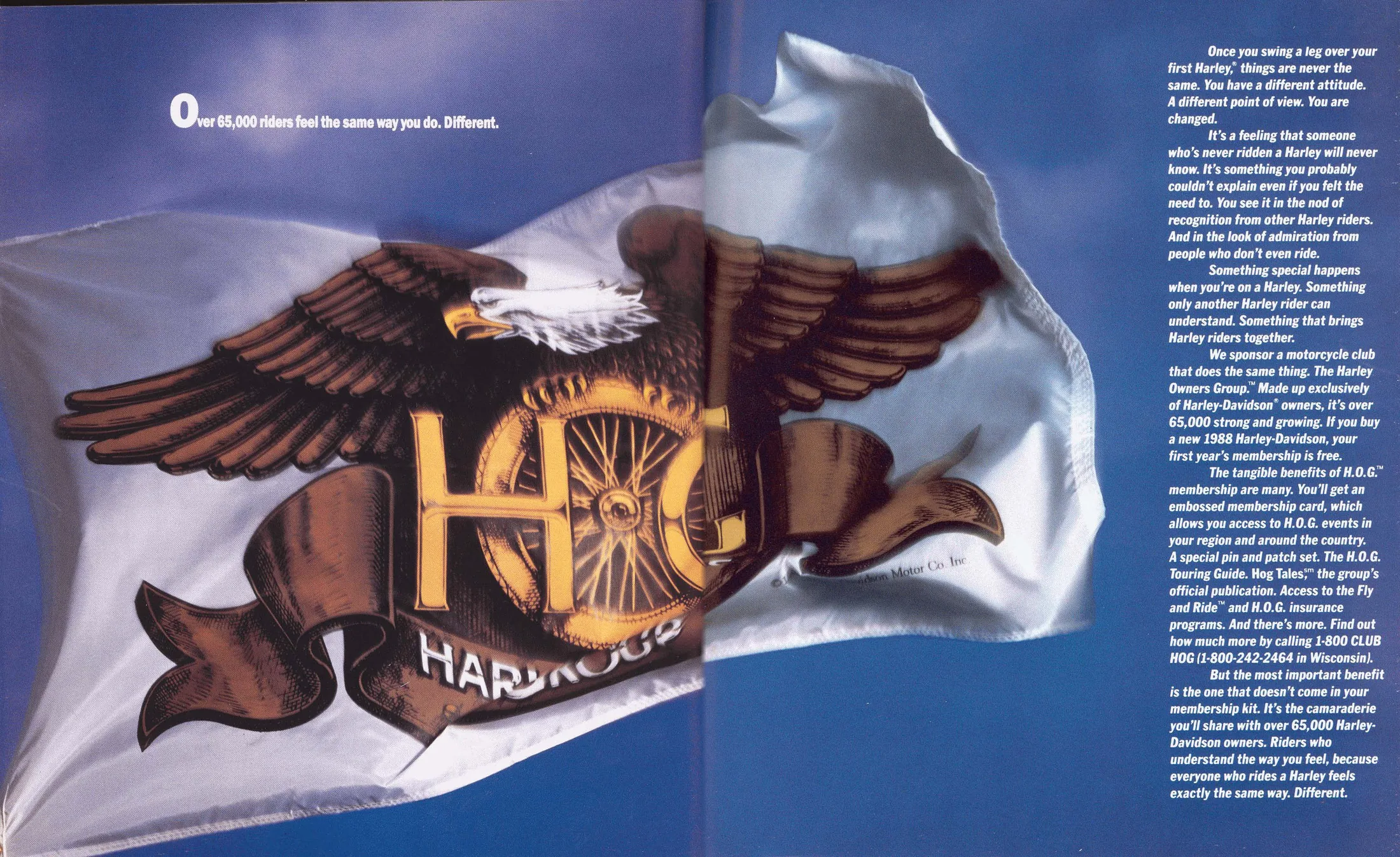
To strengthen bonds and improve communication between the company, its dealers and its riders, Harley-Davidson introduces a new concept in motorcycling, a global riding club: The Harley Owners Group (H.O.G.).
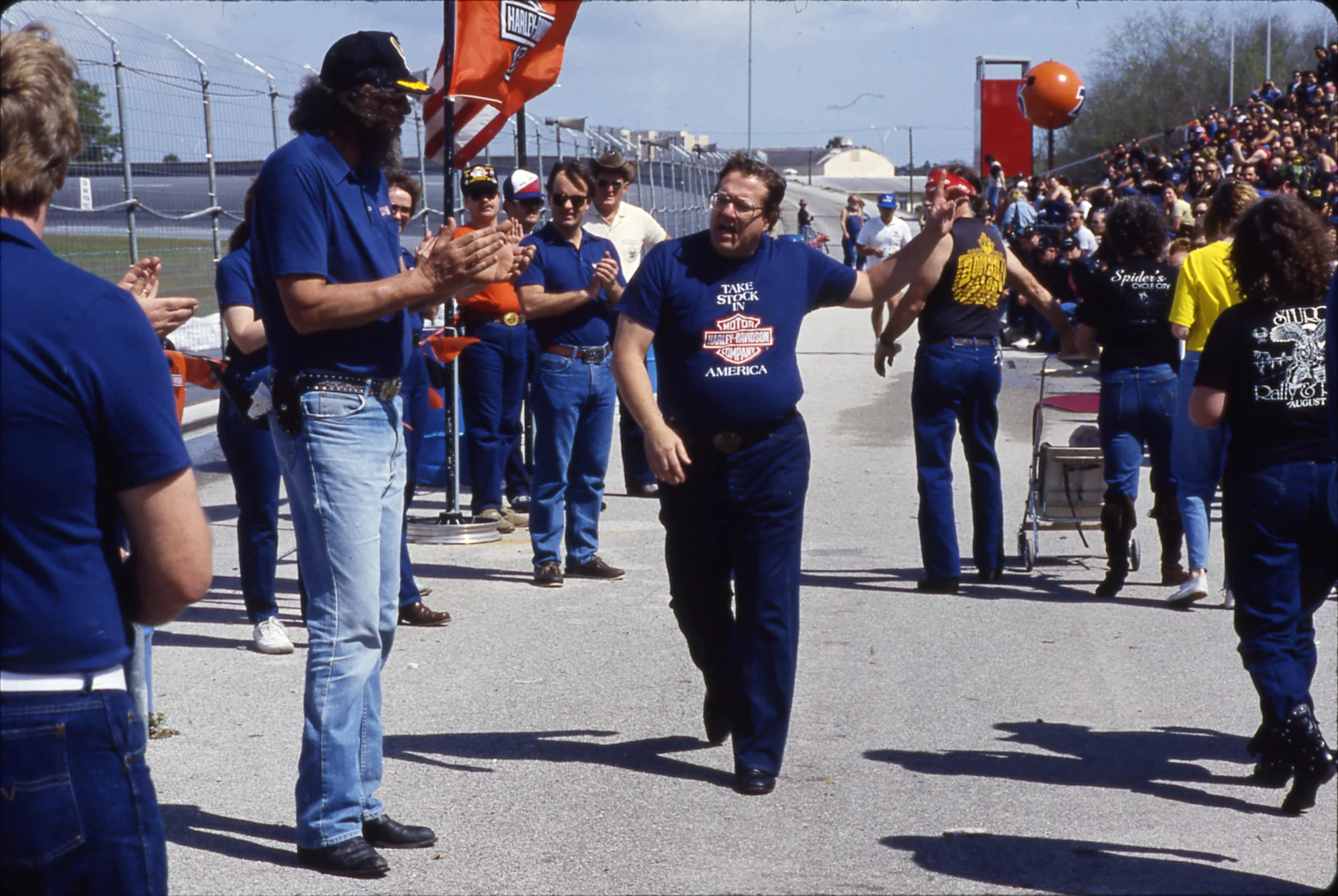
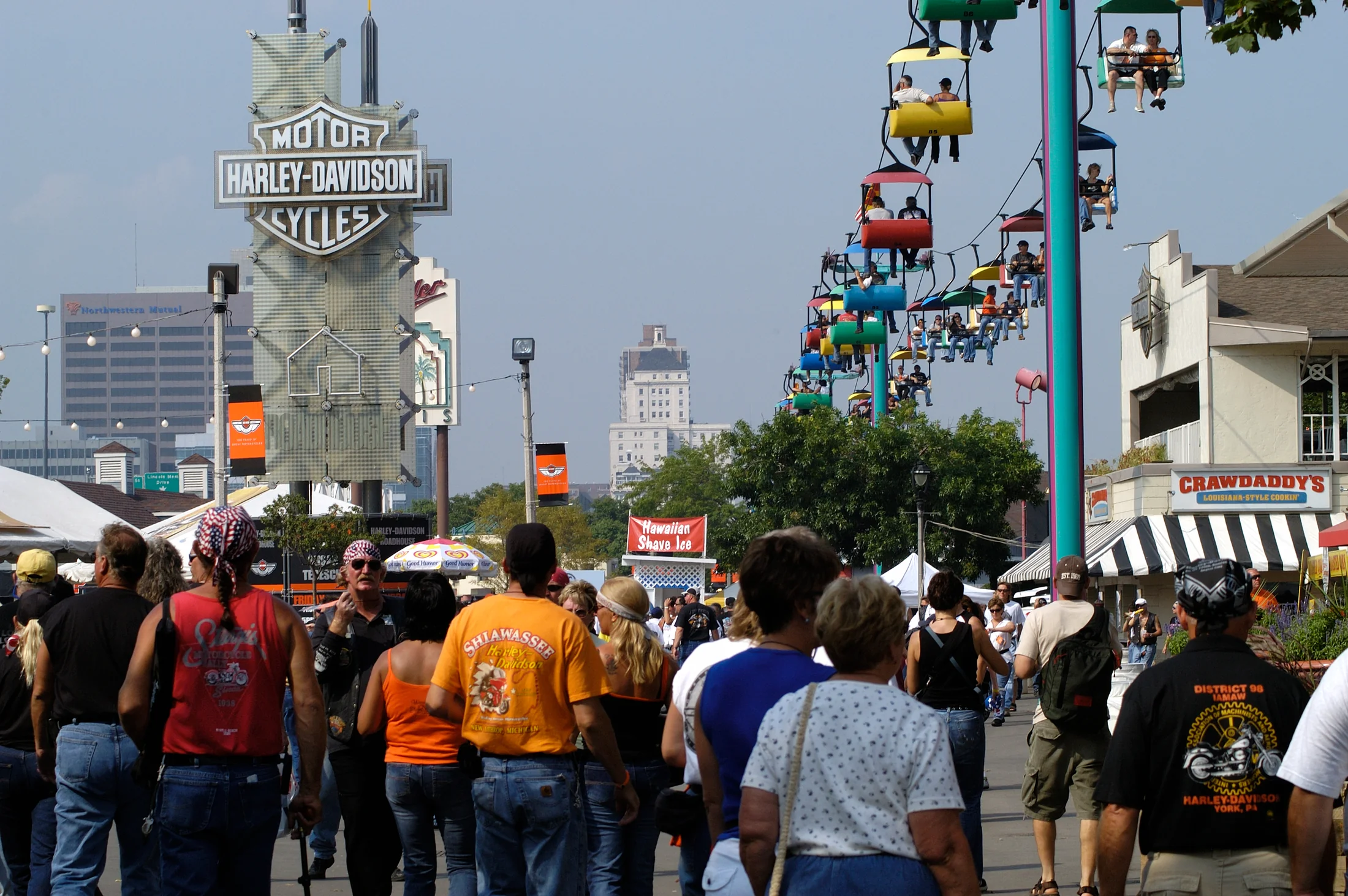
H.O.G. rallies, fundraising rides and social events give customers more reasons to ride their motorcycles and make new friends while promoting the Harley lifestyle experience. Local H.O.G. chapters meet at sponsoring Harley dealerships and ride regularly, while national and international events draw thousands of riders. With membership in the hundreds of thousands, H.O.G. is the largest and most reputable motorcycle club in the world.
As the late Rich Teerlink’s wife and a steward of his leadership philosophy and legacy, Ann offers a uniquely personal perspective on the experience.
Late 1980s to early 1990s
More Than a Motorcycle
Evolving From a Manufacturing Business to a People-Focused Business
Harley‑Davidson’s initiatives to foster a global riding community and gain intimacy with its riders rapidly gain traction as the company evolves from a business known for building motorcycles to one driven by building strong relationships with people. Customers begin to value their new-found or rekindled emotional connections with the company as much as their emotional connections with their motorcycles. Acclaim for Harley-Davidson’s people-driven, close-to-the-customer philosophy grows worldwide in tandem with demand for its motorcycles.
“As a leader, your principal job is to create an operating environment where others can
do great things.”
1989 and on
From Pyramid to Circle
A New Way to Lead: Together
The shift from top‑down management hierarchy to a circle leadership model. Ideas flow upward, outward, and across. Leadership becomes a collective practice.
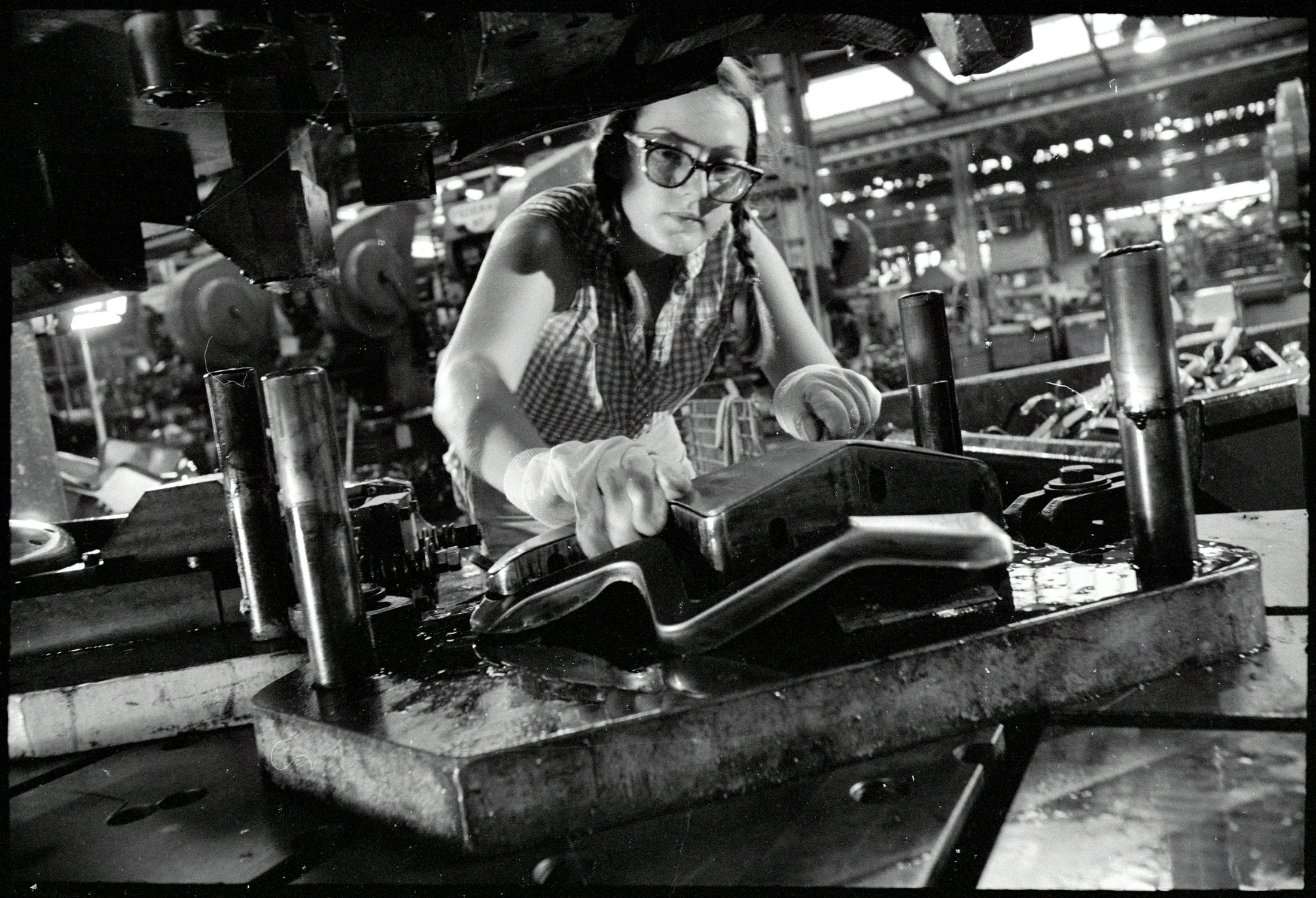
With sales, earnings and dealer/customer satisfaction growing steadily, Harley-Davidson faced a new challenge: Keeping employees motivated without a shared challenge to spur them on. Like most big companies of the era, Harley-Davidson relied on rigid command-and-control management, wherein leaders issued orders and generated manufacturing improvements, but departments rarely collaborated and compliance — following those orders — outweighed commitment.
With Vaughn Beals’ retirement in 1989, Rich Teerlink was named CEO and charged with continuing the company’s trajectory. Rich championed a revolutionary, humanistic approach to leadership that emphasized delegation of decision-making, publicly crediting and praising teams for improvements, cross-functional collaboration and urging leaders to ask employees questions instead of giving orders. Momentum built quickly, marked by a 1989 two-year union contract prioritizing cooperation over confrontation.
Under Teerlink’s direction, Harley-Davidson evolved from a top-down, pyramid-shaped organization to a more flexible and collaborative circle organization that would soon be emulated by businesses around the world.
Charitable efforts and shared values reinforce the idea that the Harley community looks outward, to something larger than itself.
Rich Teerlink strongly believed that Harley-Davidson must equally balance the needs of all its stakeholders — customers, dealers, employees, suppliers, investors and communities — in its decision-making processes. This way, the needs of one stakeholder group can’t outweigh any of the others.
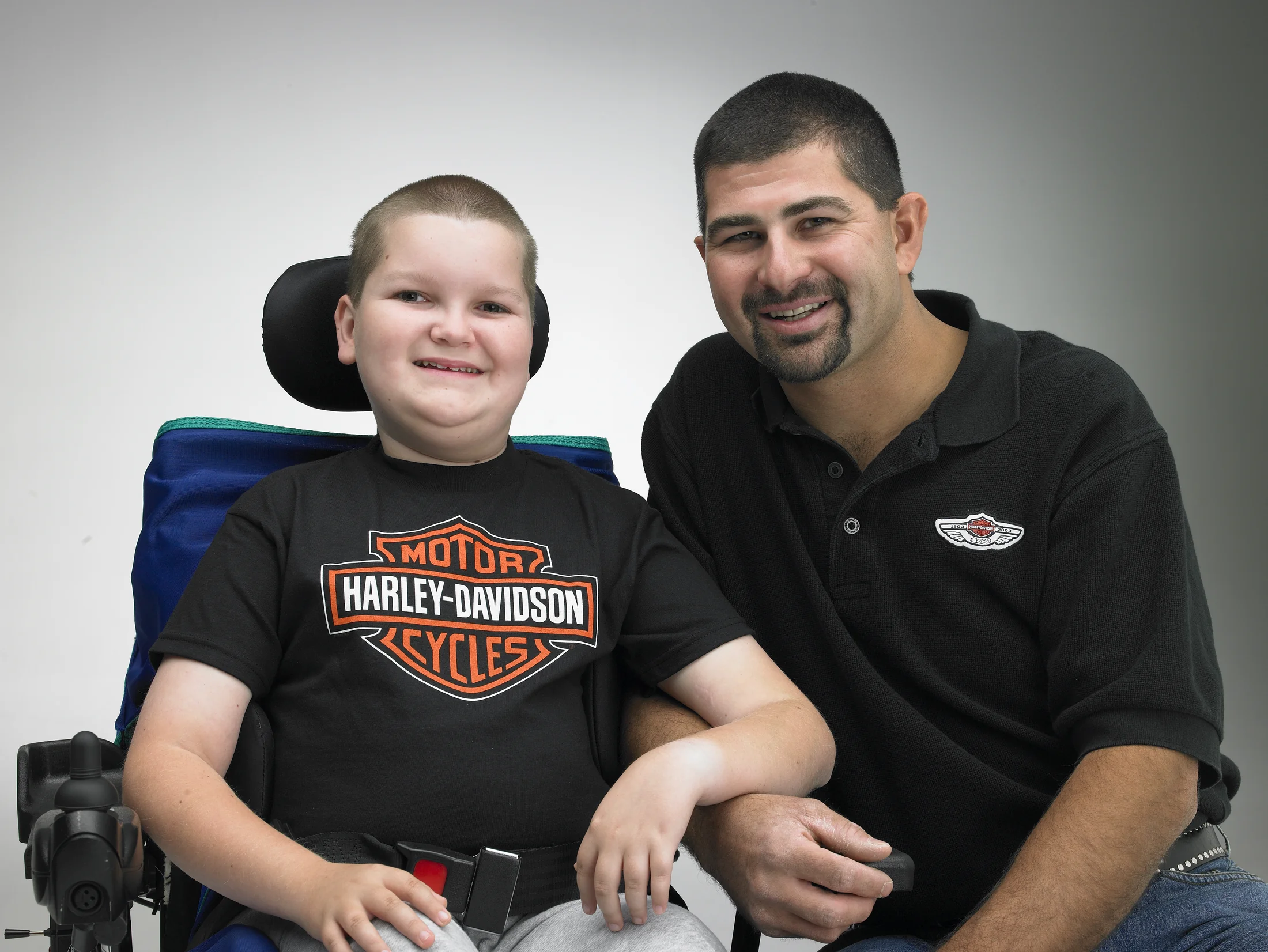
The charitable works that Harley-Davidson and its riders perform regularly are clear examples of its commitment to communities and to sharing its success with people in need. The company’s partnership with the Muscular Dystrophy Association (MDA), which started in 1980, raised more than $100 million in four decades through rider events. The company also donates millions of dollars each year through the Harley-Davidson Foundation, which is dedicated to social responsibility with a focus on community needs, education and the environment. Harley dealers and HOG chapters actively participate in fundraising and service events that benefit their local communities and raise the profile of motorcycling. Communities and service organizations have learned that they can turn to Harley-Davidson riders when they need help.
1999
The Phoenix Has Risen
Shared Ownership and Enduring Legacy
Employees, leaders, dealers, and riders have become the co‑creators of the brand’s future.
By 1999, when Rich Teerlink announced his retirement from Harley-Davidson, the company was poised to roar into the new millennium in enviable condition. The company held 49 percent U.S. market share, its revenues topped $2.5 billion and its stock price had risen more than 10,500 percent since its 1986 inception. The company shipped 177,187 motorcycles this year and while you could buy directly from the showroom floor of a dealership some of the most popular bikes had to be ordered sometimes months in advance.
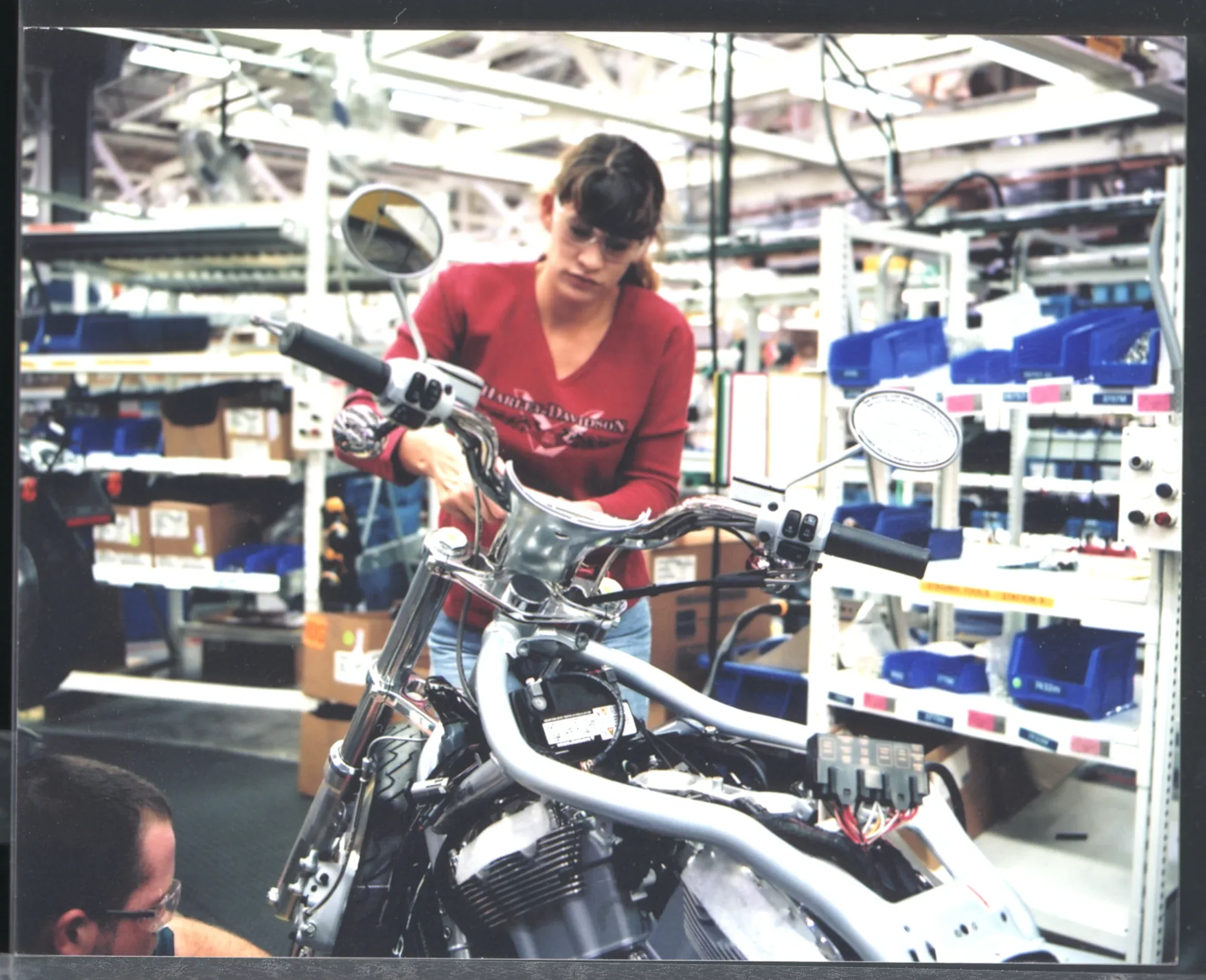
But rather than celebrate that data, company leadership preferred to focus on the cultural shift the company experienced during the prior 20 years. The move from fear-based compliance to trust-based commitment helped employee satisfaction scores soar. Operational gains saw inventory turns quadrupling while product defect rates fell to less than 5 percent. And best of all, more than 80 percent of company employees engaged annually in training. Under Teerlink’s direction, Harley-Davidson became the preeminent force in the global heavyweight motorcycle market and demonstrated that participative work structures can thrive in any business, even old-school manufacturers.
Equally important, Harley-Davidson’s success lifted and inspired the entire worldwide motorcycle market, leading to more and better opportunities for riders of all brands.
We Did It Together
Harley‑Davidson emerges not just saved, but fully transformed. The motorcycles, the culture, and the community carry forward the enduring belief: We’ll ride farther together than we ever could alone.
Unless otherwise noted, all historical photographs courtesy of the Harley-Davidson Archives, Harley-Davidson Museum, Milwaukee, Wisconsin.
Keep reading
Watch the film and archival footage, or use the media page for a section-by-section summary.