
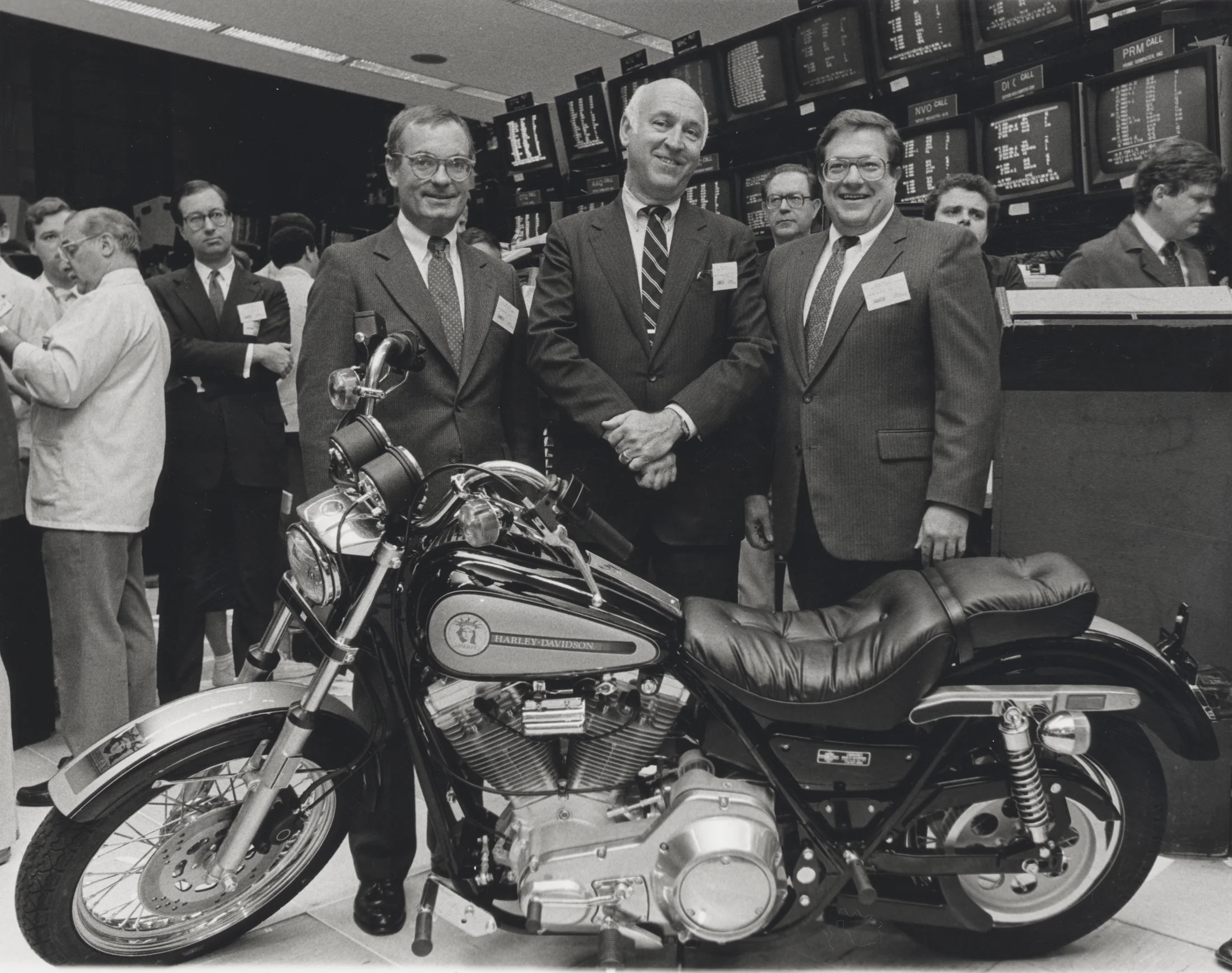
Jeff’s Interview with Rich Teerlink
Parts of the conversation with Rich Teerlink about mentorship, relationships, company culture, and Harley-Davidson’s recovery
Archival footage and films about Harley-Davidson’s recovery and the people who took part in it.
The video shown at the exhibit is a shorter version of this film.
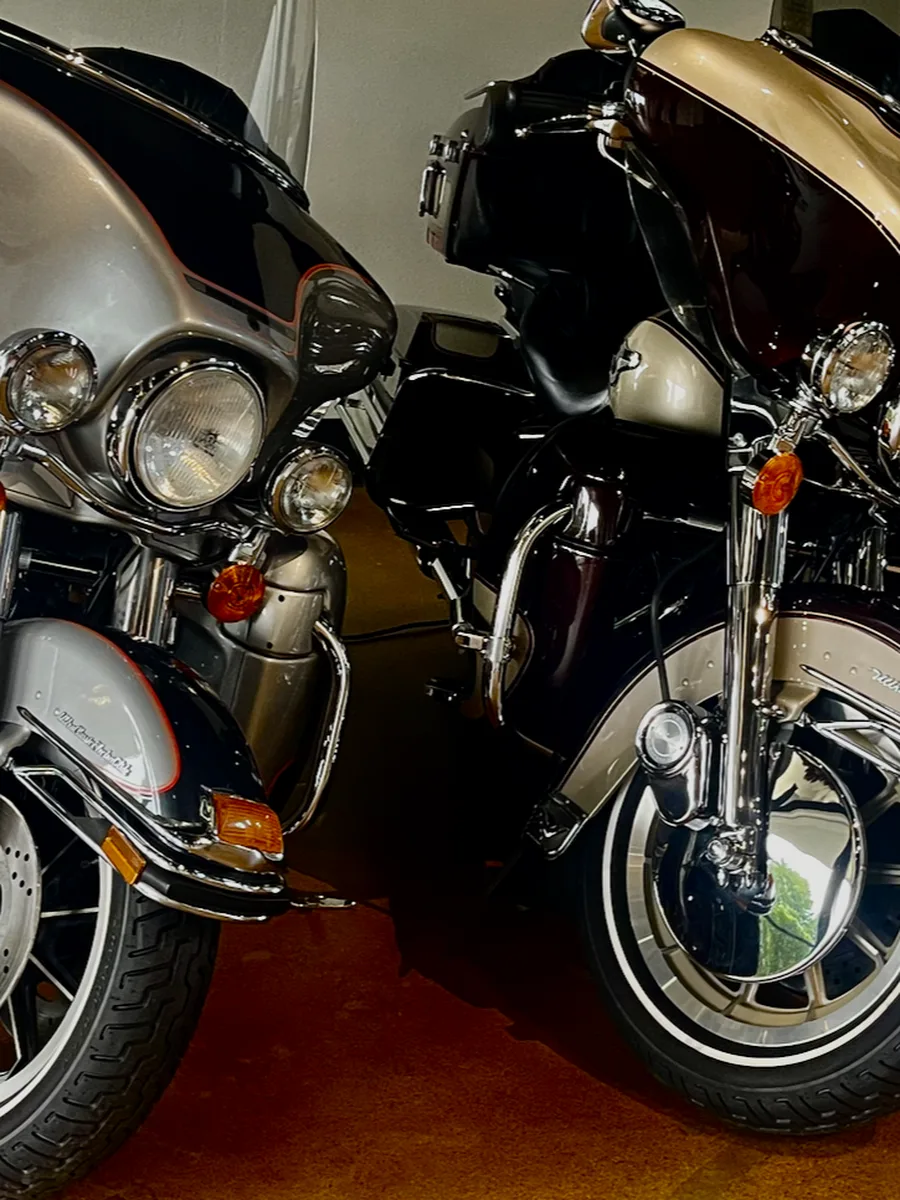
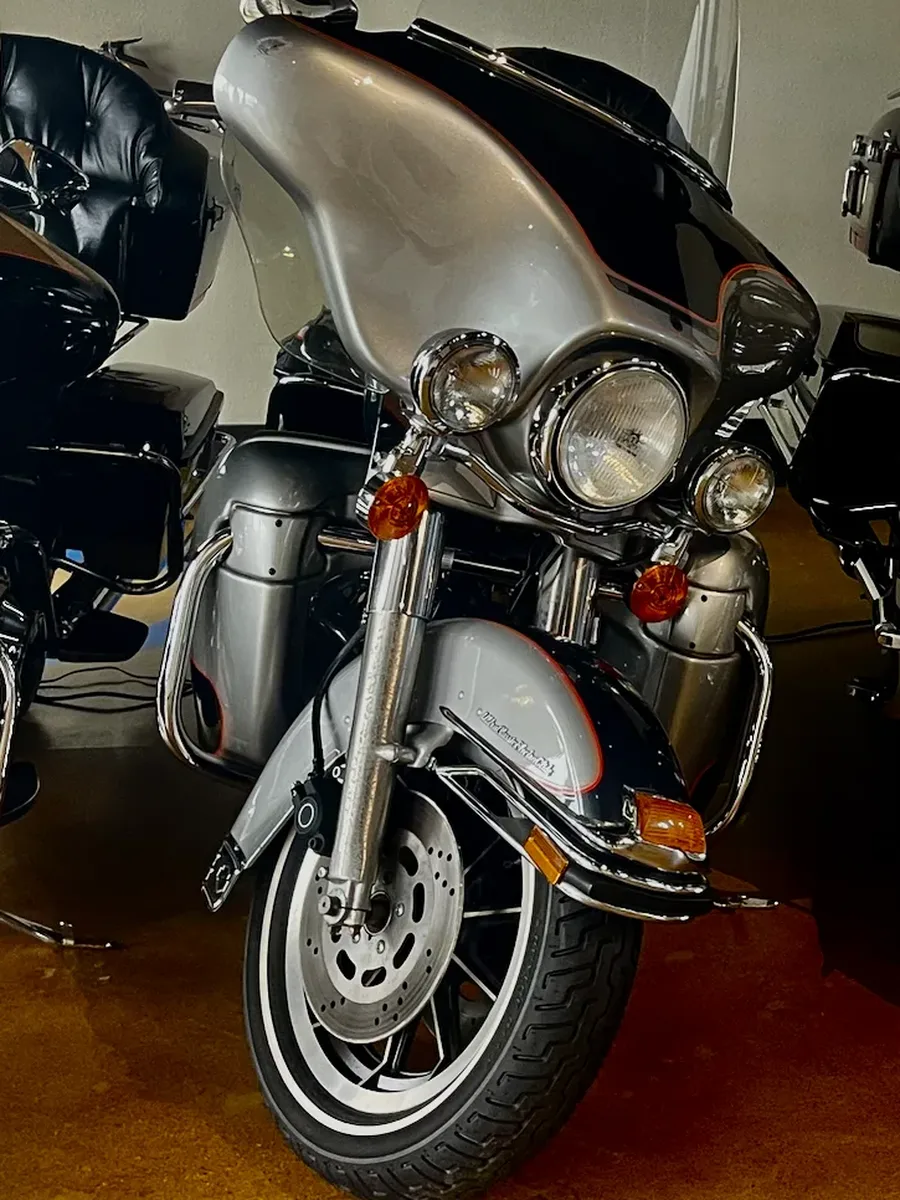
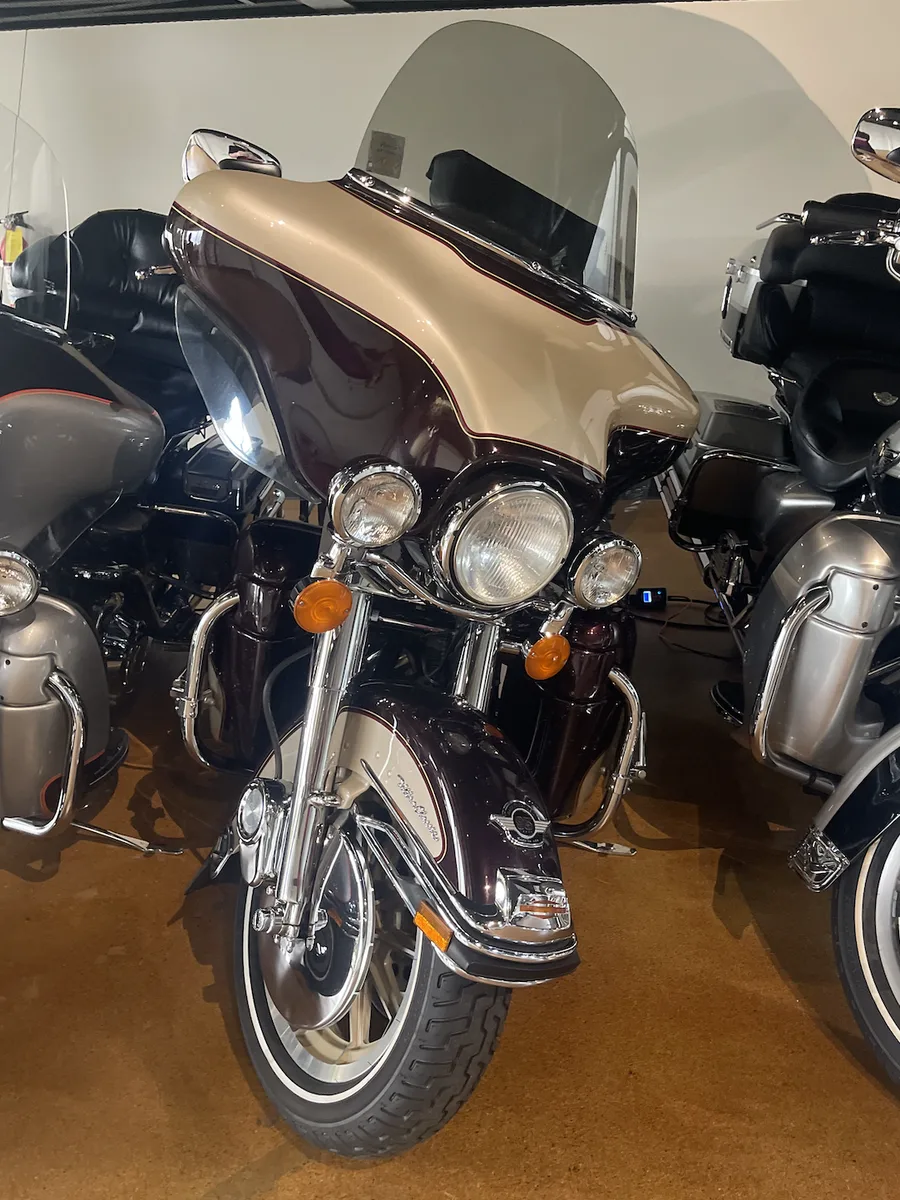
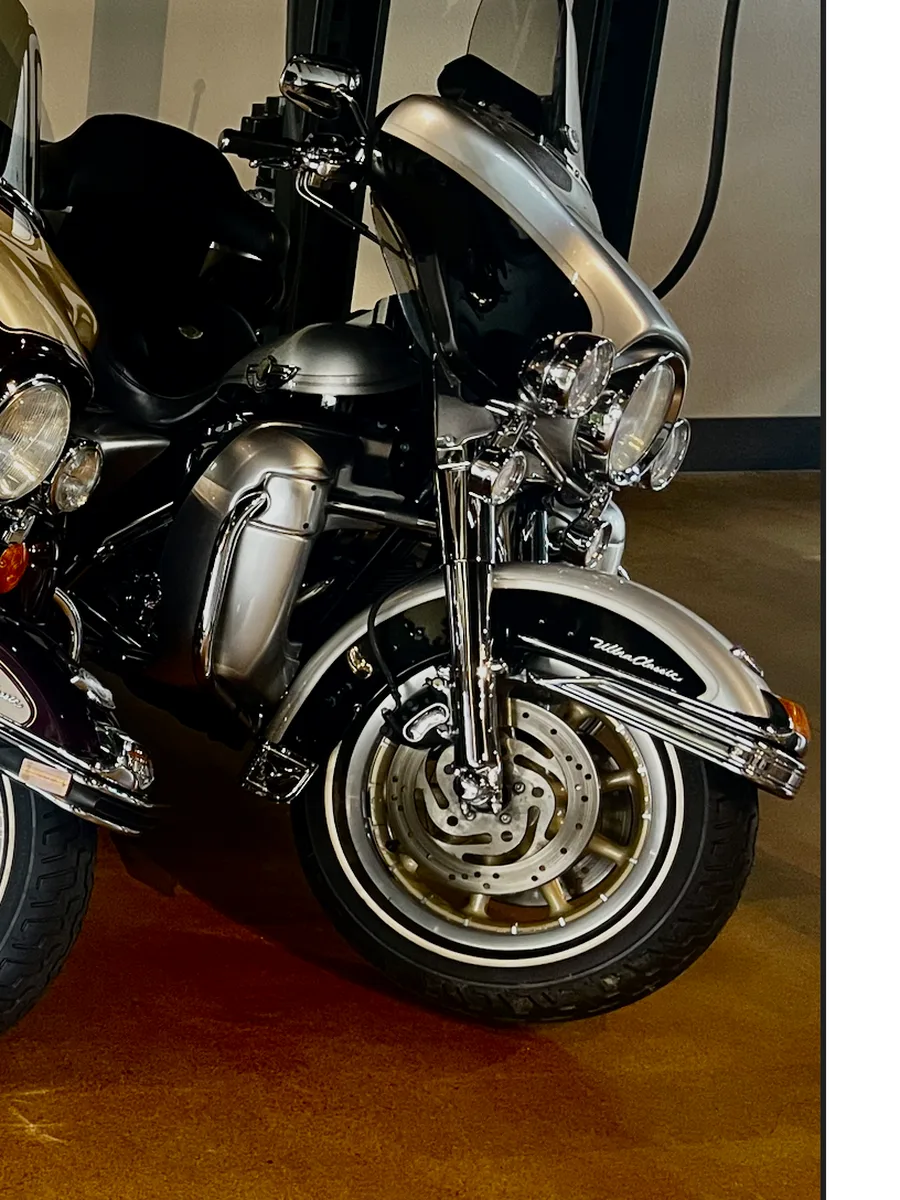
The four Harley-Davidson motorcycles in the exhibit were owned and ridden by Rich Teerlink during his tenure as CEO at Harley-Davidson. He took great pride in these motorcycles, but they were not trophies. He and his wife rode them on the Anniversary rides, often at great distances. Together they form the Rich Teerlink Anniversary Collection, the only known collection presented to an executive that has stayed together.
For more details on each motorcycle, see below.
Read Ann Teerlink’s account of the Anniversary Rides. As the late Rich Teerlink’s wife and a steward of his leadership philosophy and legacy, Ann offers a uniquely personal perspective on the experience.
Unless otherwise noted, all historical photographs courtesy of the Harley-Davidson Archives, Harley-Davidson Museum, Milwaukee, Wisconsin.
Photographs and original pages from the 1988, 1993, and 1998 Harley-Davidson models catalogs, plus a 2003 domestic literature book. Page numbers follow each original publication; pages one and two appear in sequence with later pages. Click any image to view it larger.
No images match your search.
Swipe or use arrow keys to turn pages.
Unless otherwise noted, all historical photographs courtesy of the Harley-Davidson Archives, Harley-Davidson Museum, Milwaukee, Wisconsin.
Long interviews and documentary films.
Parts of the conversation with Rich Teerlink about mentorship, relationships, company culture, and Harley-Davidson’s recovery

A New Way to Lead
In 1989, Rich Teerlink became CEO of Harley-Davidson as the company entered a new phase of growth and confidence.
Building on the foundation established during the turnaround years, Teerlink introduced a leadership philosophy that emphasized collaboration, open communication, and shared responsibility.
Rather than relying solely on traditional top-down management, employees across the company were encouraged to contribute ideas, solve problems together, and help guide improvements.
Harley-Davidson gradually evolved from a pyramid-style hierarchy into a more flexible “circle” organization where ideas moved across departments and leadership was shared.
This participatory approach strengthened relationships with employees, unions, dealers, and riders—and helped accelerate Harley-Davidson’s momentum into the 1990s.
“I’m convinced that any employee in our company, given the same information and the same understanding of that information that leadership has, would come to the same conclusions and make the same decisions that we would.”
Selected motorcycle figures, 1980 to 2005. The 1980 figure is approximate production capacity; later figures show production or shipments, as labeled.
Production capacity per year
Motorcycles produced
Motorcycles shipped
Motorcycles shipped
Motorcycles shipped
Motorcycles produced
Motorcycles shipped
Motorcycles shipped
Motorcycles shipped